Judge Strikes Down NSA warrantless domestic surveillance program
Via Think Progress, Detroit federal district Judge Anna Diggs Taylor has struck down the National Security Agency's warrantless domestic surveillance program. Numerous lawsuits have argued that the program violates the First and Fourth Amendments, as well as the Foreign Intelligence Surveillance Act.
Judge Taylor's Opinion can be found here (pdf). A snippet:
In this case, the President has acted, undisputedly, as FISA forbids. FISA is the expressed statutory policy of our Congress. The presidential power, therefore, was exercised at its lowest ebb and cannot be sustained.
A copy of the injuction can be found here (pdf). It enjoins the administration from "directly or indirectly utilizing the Terrorist Surveillance Program."
POGO's stance is the following:
- The White House has asserted that it operated within the bounds of the Constitution and with the law. However, Congress has passed a law on how the Executive can engage in electronic surveillance consistent with the Bill of Rights, in particular the Fourth Amendment, with the Foreign Intelligence Surveillance Act of 1978. Thus the Executive was not operating within a "zone of Constitutional twilight," where Congress has not exerted itself, but rather was in violation of the law and of our constitutional system of separation of powers.
- The NSA warrantless domestic surveillance program was inappropriately disclosed to Congress. In violation of the National Security Act of 1947, the Congressional intelligence committees were not "fully and currently informed" of the program. Until The New York Times disclosure of the program in December 2005, only the "Gang of Eight'—the leadership of the committee and of the two legislative chambers—were informed and even then, the leaders of House and Senate were not briefed until March 10, 2004, more than two years after the program began. Only covert action programs are meant to be disclosed soley to the Gang of Eight. The NSA program was not a covert action, a Congressional Research Service memo earlier this year states (pdf).
Related Content
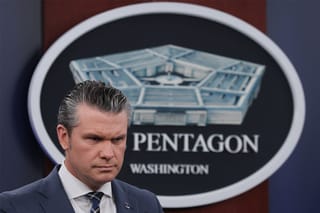
Pentagon Refuses Legal Demand to Release Video That Reportedly Shows U.S. Military Killing Shipwrecked Survivors
POGO Investigates will continue its legal effort to make this footage public via the Freedom of Information Act (FOIA)