K Street Cashes in on U.S. Control of Venezuelan Oil
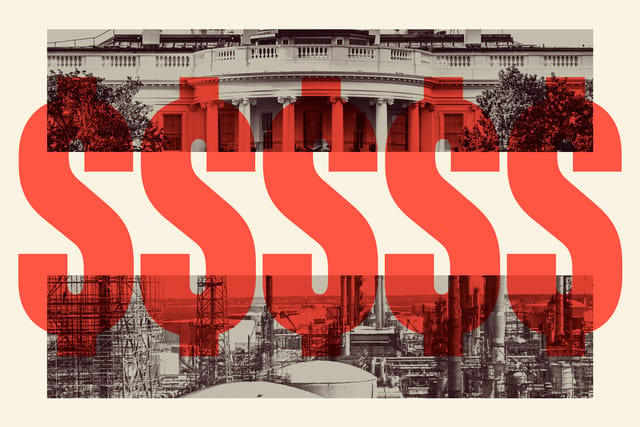
(Photos: Getty Images; Illustration: Leslie Garvey / POGO)
Since U.S. special forces captured Venezuelan leader Nicolás Maduro on January 3, companies have made significant plays for Venezuela’s mineral resources. According to official disclosures, at least seven companies have hired lobbying firms with close connections to the Trump White House to lobby the administration on accessing Venezuelan oil and natural resources, and related issues such as permissions to operate.
The growing line of Venezuela-related lobbying by Trump-linked firms underscores the view that getting favored treatment from U.S. agencies entails gaining access to top U.S. officials through people with insider access — and some of those U.S. agencies exercise significant control over who does business with the Latin American country’s oil industry.
Get the latest
Weekly newsletter and occasional updates
Indeed, Brian Ballard, president of Ballard Partners, the deeply Trump-linked lobbying firm winning several new clients after Maduro’s capture, said on a recent podcast that “there’s eight or 10 people in the administration on all the issues that really matter that come to him [President Donald Trump] directly.”
“Big decisions are made by him after he hears all the evidence. And I think that’s unique,” Ballard said, remarking on how much decision-making is centralized in the Trump presidency and how his firm has access to people close to the president. “We’ve had the pleasure of knowing these folks for a long, long time, and so it gives us an advantage.”
The administration’s initial deals with companies to sell Venezuela’s oil, potential corruption, and other concerns with the handling of Venezuelan mineral resources have led Democratic lawmakers to ask pointed oversight questions in letters to the White House and federal agencies, including as recently as this month.
The White House dismissed questions about whether the administration played favorites with the businesses being allowed access to Venezuela’s natural resources. “The media’s continued attempts to fabricate conflicts of interest are irresponsible and reinforce the public’s distrust in what they read,” said White House spokesperson Taylor Rogers in an email to POGO. “Thanks to President Trump, great progress has quickly been made in Venezuela--critical minerals, mining, oil and gas, and other industries are moving at ‘Trump Speed’ to invest in newfound Venezuelan markets.”
“That Money Will Be Controlled By Me”
Immediately in the wake of Maduro’s capture, the administration signaled that a handful of top officials were key decision-makers when it came to Venezuela’s resources, and, as previously reported, the first companies winning deals appeared well-plugged in.
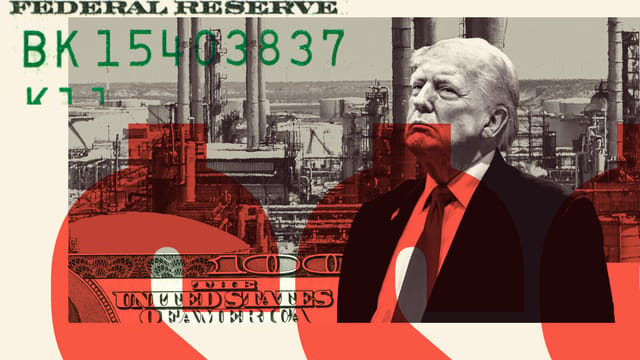
“This Oil will be sold at its Market Price, and that money will be controlled by me, as President of the United States of America, to ensure it is used to benefit the people of Venezuela and the United States!” Trump wrote on January 6. Days later, on January 9, Trump issued an executive order directing Treasury Secretary Scott Bessent to manage the oil revenue with guidance from Secretary of State Marco Rubio, a top administration voice who pushed for Maduro’s capture.
During a January 9 White House meeting with a range of firms, including some of the world’s largest oil companies, Trump said Energy Secretary Chris Wright and Interior Secretary Doug Burgum would be involved in the deals as well, adding, “We’re going to be making the decision as to which oil companies are going to go in.”
Ballard Partners’ New Venezuela Working Group
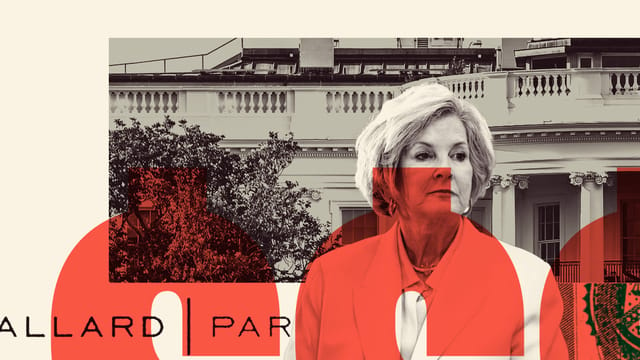
The lobbying firm winning the lion’s share of this business so far is Ballard Partners, well known for its ties to Trump and Trump’s Chief of Staff Susie Wiles, who helped set up Ballard Partners’ DC office and was first introduced to Trump by Brian Ballard.
Ten days after Maduro’s capture, on January 13, Ballard Partners announced a new dedicated Venezuela Working Group and touted “former high-ranking government Trump administration officials” working at the firm.
That same day, Ballard registered Swedish-based investment company Maha Capital as a new client seeking assistance with “approvals for Venezuelan oil field acquisitions and operations.” Micah Ketchel and Thomas Boodry, former Trump aides who’ve also worked for Rubio, were listed as part of the lobbying team. Maha Capital paid Ballard $120,000 in the first quarter of 2026 to lobby both the State and Treasury departments.
On March 18, the Treasury Department’s Office of Foreign Assets Control (OFAC) authorized “established” U.S. entities to do business with Venezuela’s state-owned oil company Petróleos de Venezuela, S.A. (PDVSA), paving the way for Maha Capital to move forward inside Venezuela. In a press release that same day, Maha Capital’s CEO said he was “pleased” with the decision, and the company announced it would buy a stake in a Venezuelan oil field and would transfer that stake to its U.S.-based subsidiaries to comply with the OFAC decision. Maha Capital did not respond to a request for comment.
The lobbying firm winning the lion’s share of this business so far is Ballard Partners, well known for its ties to Trump and Trump’s Chief of Staff Susie Wiles.
Soon after, a host of other companies hired Ballard as well — and like Maha Capital, they’ve all been foreign companies.
Panama-based Knob Petroleum, which provides services related to drilling and oil and gas infrastructure, hired Ballard to lobby on “Venezuelan operations and permissions.” Knob Petroleum paid Ballard $70,000 to lobby the State and Treasury departments during the first quarter of the year. In early March, the company announced a Venezuelan subsidiary had finished a project improving transport and handling of a type of heavy crude oil from the country’s Orinoco Belt, home to the world’s largest known reserves of heavy crude. Knob Petroleum did not respond to POGO’s query.
The Spain-based consulting company Elo Atlantic SL hired Ballard to provide “strategic advisory services on potential natural resource exploration initiatives in Venezuela, with a focus on navigating U.S. regulatory, sanctions, and policy dynamics.” Elo Atlantic SL paid Ballard $380,000 for the first quarter of the year, including for the services provided by William Russell, a first-term White House staffer, although the disclosure states no federal government entities were lobbied. The company did not respond to questions.
Thailand-based Tipco Asphalt Public Company Limited hired Ballard for “guidance pertaining to licenses and/or authorizations from the State Department to acquire Venezuelan crude directly from Venezuela.” Tipco Asphalt paid Ballard $60,000 for the first quarter of the year for lobbying both the State and Treasury departments.
A 2020 Associated Press investigation found that Tipco Asphalt played a key role in allowing Venezuela’s state-run oil company to mitigate U.S. sanctions. The Associated Press reported on records showing that Tipco Asphalt’s arrangement with PDVSA allowed the state-run company “to move hundreds of millions of dollars around the world that it might not be able to otherwise.” Tipco Asphalt has said its actions were legal, and it has not been charged with any wrongdoing.
“Consistent with what most companies are doing with respect to entering the newly opened Venezuela market, and with reference to your inquiry, Tipco Asphalt has engaged several U.S. consulting and law firms to advise on the latest developments relating to U.S. sanctions against Venezuela,” a Tipco Asphalt spokesperson told POGO via email. “This is part of its normal regulatory monitoring and advisory processes.”
Even a Venezuelan-based company, Vale Maritimo C.A., hired Ballard to lobby on “Venezuelan operations and permissions.” The company paid Ballard $70,000 to lobby the State and Treasury departments during the first quarter of the year. A Ballard filing describes Vale Maritimo as a “Mining company,” although a website with importation data and a job posting indicates the company has been involved in shipping. POGO was unable to reach the company.
“Following President Trump’s leadership and Maduro’s removal, the United States constructed a licensing framework through OFAC and the State Department to permit lawful, transparent commercial engagement with Venezuela and to channel that activity through regulated rather than sanctioned pathways,” said Justin Sayfie, a partner with Ballard, in an emailed statement. “Ballard Partners is proud to represent clients who have chosen the regulated, transparent path, because the reconstruction of Venezuela’s economy is squarely in the United States’ foreign policy interest and will be advanced by companies willing to do business with U.S. partners and within U.S. law.”
Lobbying Began Even Before Maduro's Capture
Before Ballard saw an influx of Venezuelan-related work, other firms had been lobbying the administration before Maduro was captured. Some of these clients won big after control of the country’s oil shifted to the U.S.
A major early moment was the January 9 White House meeting. At the table were two controversial oil trading companies — Vitol and Trafigura — that won the first U.S. deals regarding Venezuelan oil and had lobbied the Trump administration last year.
Vitol and Trafigura had previously been accused by the U.S. Justice Department of bribing foreign officials and paid settlements in 2024 to resolve claims of market manipulation inside the U.S. Trafigura pleaded guilty to the foreign bribery charges, and Vitol entered into a deferred prosecution agreement.
A senior employee for Vitol donated millions of dollars to Trump-aligned political action committees and was in the January 9 White House meeting but has since retired from Vitol, according to a company spokesperson. In a January filing, Vitol’s lobbyists at Crossroads Strategies disclosed they had engaged in advocacy efforts on “global energy markets” aimed at the Executive Office of the President in the immediate months before Maduro’s capture. Crossroads’ lobbying work for Vitol ended on December 31, 2025. Vitol’s spokesperson did not answer questions about the role of its lobbyists, or if they have done any Venezuelan-related work.
Trafigura hired The Ragnar Group last summer, which has disclosed that its lobbyist and co-founder Robert Wasinger lobbied the State and Energy departments on “energy issues,” including at the start of this year. The Ragnar Group’s website describes Wasinger as “one of the first senior members” on Trump’s 2016 campaign.
The Ragnar Group was not the only Trump-tied firm hired prior to Maduro’s capture that saw a client benefit afterwards.
Trafigura says Ragnar played no role with regard to Venezuela. “Neither Ragnar Group, nor any other lobbying firm, lobbied any US government department in connection with our activities in Venezuela,” a Trafigura spokesperson emailed POGO in response to questions. “More broadly, as a major commodities and energy supplier to and exporter from the US, Trafigura engages external advisors from time to time to assist in engaging with policymakers, to share industry perspectives and understand emerging areas of policy in an important market.”
Whether it played a role or not, The Ragnar Group was not the only Trump-tied firm hired prior to Maduro’s capture that saw a client benefit afterwards.
Hired last spring, Checkmate Government Relations has disclosed being paid $720,000 over the last year by French oil company Maurel & Prom for “Agency engagement focused on sanctions and energy policy related to Venezuela.” Two former White House staffers and Chris LaCivita Jr., the son of one of Trump’s top 2024 campaign managers, have been part of Checkmate’s lobbying team on the account, which has targeted the White House and several agencies.
Early last year, shortly before Maurel & Prom hired Checkmate Government Relations, the Trump administration revoked a license allowing the French oil company to work in Venezuela when Maduro was still in charge. After Maduro’s capture, the Treasury Department allowed Maurel & Prom to operate in Venezuela again, beginning in February.
Maurel & Prom and Checkmate Government Relations did not respond to POGO’s requests for comment.
The oil majors Shell and Chevron also lobbied the White House and other agencies on Venezuelan issues before Maduro’s capture, according to disclosures. Since January, other major oil industry companies’ in-house lobbyists, including BP America and Baker Hughes, have added Venezuela to their lobbying agenda.
Lobby Shops with High-Level State Department Ties
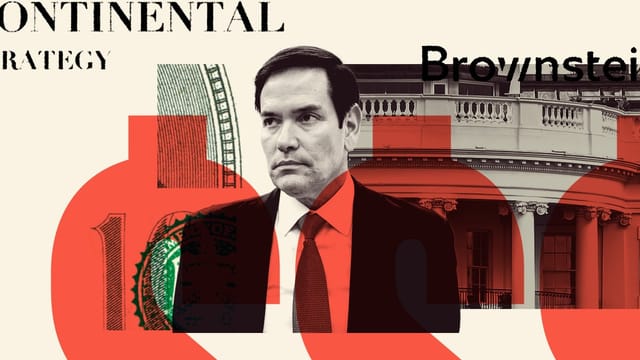
One agency that’s been a target of these lobbying firms’ efforts is the State Department, which has an important role when it comes to Venezuela’s oil industry. These firms have hired former State Department officials with high-level department experience from Trump’s first term, and others with Trump ties.
Secretary of State Rubio has been seen as a particularly influential administration figure when it comes to Venezuela, where he has long said there is a case for using the U.S. military to remove Maduro. As both secretary of state and national security adviser, Rubio has vast influence over U.S. foreign policy, and the Trump administration’s national security strategy states that a Western Hemisphere that “supports critical supply chains” is part of a “Trump Corollary” to the Monroe Doctrine (what some are calling the “Donroe Doctrine”).
Under a standing executive order from Trump’s first term, the ability of companies to do business with Venezuela’s state-owned oil company is blocked and subject to sanctions unless otherwise authorized by the Treasury Department, in consultation with the State Department. Rubio has been seen as so central to these decisions that some called Rubio the new “viceroy” of Venezuela after Maduro was captured.
Thus, the State Department is seen as a critical stop for oil industry lobbyists interested in Venezuelan resources.
Helmerich & Payne, a U.S. oil and gas drilling company, hired Continental Strategy in March for “Advocacy related to U.S. energy security and commercial engagement/compliance in Venezuela.” An April 2026 disclosure shows Continental Strategy was paid $45,000 for less than a month of work lobbying the State Department.
The firm’s lobbyists on the account include its founder and president, Carlos Trujillo, who was nominated as both an ambassador to the Organization of American States and later unsuccessfully as assistant secretary of state for Western Hemisphere affairs during Trump’s first term. Trujillo has been described as a friend of Rubio’s and a “Top Latino Strategist for Trump.” Katie Wiles, the daughter of Trump’s chief of staff, also works at Continental Strategy (she was promoted the day after her mother was announced as Trump’s new chief of staff after the 2024 election), although she is not listed as a lobbyist for Helmerich & Payne.
Trujillo recently remarked to a magazine that “Washington, DC is experiencing a fundamental disruption — a black swan event where traditional lobbying and public affairs strategies that dominated the past 40 years are being upended.” He said his firm’s insider connections allow them “uniquely to guide clients through this period of historic change with insight and effectiveness that others simply cannot match.”
It is not entirely clear what Helmerich & Payne’s Venezuelan lobbying agenda relates to, but more than 15 years ago, the Hugo Chavez-led Venezuelan government seized 11 Helmerich & Payne drilling rigs, which sparked an ongoing and long-running legal battle in U.S. courts.
Neither Continental Strategy nor Helmerich & Payne responded to requests for comment. Back in January, a Helmerich & Payne spokesperson told the Wall Street Journal that the company was somewhat wary of reentering Venezuela. “Any consideration of future activity would depend on a careful evaluation of potential partnerships, political and economic conditions and appropriate legal and financial protections,” she said.
An oil and gas equipment manufacturer named Salamander Solutions hired the firm Brownstein Hyatt Farber Schreck to lobby on “issues related to oil developments and production in Venezuela.” The company paid the firm $230,000 for its services in the first quarter of the year and lobbied the Executive Office of the President, the National Economic Council, and the departments of Energy, Defense, Commerce, State, and Treasury. Salamander Solutions did not respond to a request for comment.
“Tremendous opportunities for US companies to invest in Venezuela’s mining and oil and gas sectors. Can’t wait to see how this develops!”
Samantha Carl-Yoder, one of the Brownstein lobbyists on the Salamander Solutions account, served at the State Department across multiple administrations. One of her last roles at State, during Trump’s first term, was as chief of staff for the under secretary for political affairs, and she advised on issues regarding Venezuela and energy matters, according to her LinkedIn profile. In February, she was appointed to the board of directors of Ivanhoe Atlantic, a mining company, which her lobbying firm touted on its website.
The next month she traveled to Venezuela when Interior Secretary Burgum visited, and their paths appear to have crossed. She traveled with the geologist son of billionaire Robert Friedland, the person in charge of Ivanhoe’s majority stakeholder.
“Proud to represent Ivanhoe Atlantic Inc with Govind Friedland on Secretary Burgum’s trip to Venezuela last week,” Carl-Yoder wrote in a LinkedIn post. “Tremendous opportunities for US companies to invest in Venezuela’s mining and oil and gas sectors. Can’t wait to see how this develops!”
On LinkedIn, Carl-Yoder posted a picture of Burgum standing next to Venezuela’s interim president, Delcy Rodríguez, taken from just feet away, as well as a photo of what appears to be an official meeting.
“We cannot speak on if she met with him directly but clearly, she was in the room on behalf of her company as her post suggests. She did not travel with Secretary Burgum or the delegation,” said an Interior Department spokesperson in an email. “She was a representative of Ivanhoe for a mining meeting not oil and gas. She was not a guest of Interior.” Carl-Yoder did not respond to a request for comment.
Carl-Yoder’s post thanks the U.S. embassy in Venezuela “for all their support!”
Related Content