Behind the New Rule That’s the Latest Attack on Public Servants
A new rule strips more protections from civil servants and further consolidates power in OPM.
(Illustration: Ren Velez / POGO)
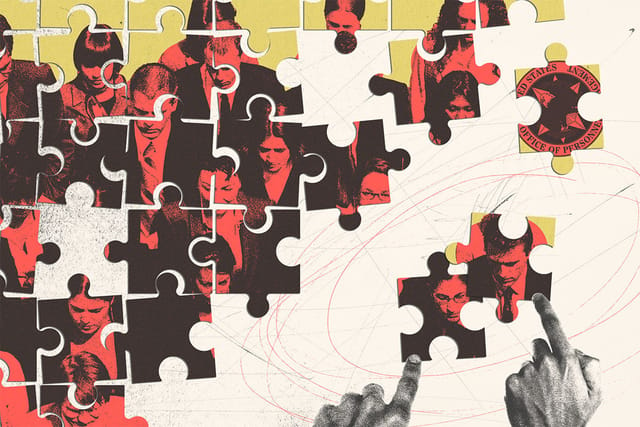
In early June, the Office of Personnel Management (OPM) proposed a new rule on the “suitability and fitness” of federal employees. This change would strip employees of statutory due process protections that Congress has provided, allowing the government to fire them more easily and arbitrarily.
Right now, OPM predominantly uses “suitability” determinations to vet applicants and new hires (and only current employees under specific circumstances). This new rule would apply “suitability” to current employees, based on their post-hiring conduct.
It is certainly important to ensure that applicants don’t have any red flags in their past that might pose a risk to the government or threaten their ability to succeed on the job. And of course federal workers should be held to a high standard of performance and behavior. But we already have processes in place to ensure that. This rule wouldn’t strengthen them. Instead, it would:
- authorize the government to subvert longstanding civil service protections,
- allow the current and future administrations to further politicize the civil service, and
- escalate whistleblower retaliation and chill protected speech.
Subverting Longstanding Civil Service Protections
When Congress passed the Civil Service Reform Act, it legislated ways to address employee misconduct and poor performance. If an employee’s performance is a problem, individual agencies largely use one of two processes — Chapter 75 or Chapter 43 — to demote or remove them.
These processes are designed to ensure agencies can terminate employees who underperform while also protecting civil servants from firings based on political, retaliatory, or other unlawful reasons.
But this proposed rule would circumvent these key civil service protections by authorizing OPM, the federal government’s HR office, to take “suitability actions” against current government employees without the guardrails to prevent unwarranted terminations.
That’s because the Merit System Protection Board (MSPB), which allows federal employees to appeal unfair disciplinary actions and have them overturned, has a much more limited ability to review the removal of employees for suitability than for those removed under Chapter 75. While employees could still appeal, the Board may only issue findings and cannot overturn OPM’s actions, leaving OPM as the final decision-maker in “suitability” cases.
By OPM’s own estimate, its new proposed rule would recategorize approximately half of all termination actions currently initiated under Chapter 75 as “suitability” actions. The result could strip roughly 1,000 career employees of their due process rights each year and prevent the MSPB from overturning any of these removals that are unlawful or unreasonable.
There is simply no justifiable rationale to remove MSPB’s authority to decide the merits of these civil servants’ appeals. This rule would diminish independent enforcement of merit system principles, making employees more vulnerable to biased and unwarranted actions — and threatening the fairness and integrity of the entire civil service.
Consolidating Authority Within OPM
The rule change wouldn’t only scale back some civil service protections; it would also concentrate power within an office that’s already demonstrated its commitment to consolidating power in the presidency and politicizing the civil service.
To authorize this proposed rule, the administration relies on two specific statutes, both of which speak to the president’s powers when it comes to civil servants. However, neither of these sections justify the rule change.
Under 5 U.S.C. 3301, Congress authorized the president to “prescribe such regulations for the admission of individuals into the civil service in the executive branch as will best promote the efficiency of that service” (italics added). This does not apply to current civil servants: The Merit Systems Protection Board has held that this statute governs only the fitness of applicants, except potentially where OPM later finds an employee was unfit at the time they were hired.
In 5 U.S.C. 7301, Congress authorized the president to “prescribe regulations for the conduct of employees in the executive branch.” But processes for removing civil servants for misconduct already exist. And this section does not allow the president to dictate new processes for taking action against employees accused of misconduct, particularly if those new processes strip civil servants of congressionally mandated protections.
This proposed rule seeks to undermine one of the foundational components of our federal government: the professional, nonpartisan civil service.
In addition to claiming expanded authorities for the president, the proposed rule also removes power from individual agencies and consolidates that power within OPM. This rule would require agencies to refer suitability questions to OPM, which would determine whether to take action. This would only further concentrate control of the federal workforce in an administration seeking to completely politicize it.
This rule would both remove critical personnel decisions from agencies and undercut restrictions that protect against an administration attempting to further politicize the civil service.
Increasing Opportunities for Retaliation
Finally, the proposed rule would also add new and vague criteria by which OPM can determine suitability, which means this rule would make any politically motivated firings easier to enact while making them harder to appeal.
One new factor for OPM to consider, for example, is “theft or misuse of government resources and equipment, or negligent loss of material government resources and equipment.” Vague rationales such as “misuse of government resources” easily allow for innocuous behavior, such as losing a pen or misplacing an office stapler, to be selectively used against employees for political reasons.
More importantly, justifications based on the “misuse of government resources” could immediately implicate whistleblowers who use government documents to show evidence of wrongdoing while making lawful disclosures. Whistleblowers are a key guardrail against waste, fraud, and abuse: They keep our government honest from the inside. But this rule would increase the risks they face when making legal disclosures. They could end up not only dealing with retaliation or losing their jobs, but even facing serious criminal charges.
Another criterion added in the rule change is the “refusal to certify compliance with, and/or adhere to, applicable non-disclosure obligations.” Currently, agencies are prohibited from enforcing nondisclosure agreements that do not contain language specifying that provisions do not supersede whistleblower protections. However, unenforceable nondisclosure agreements are still sometimes a tool agencies wield to chill protected speech.
Intimidating employees into adhering to potentially unlawful nondisclosure agreements as a means of demonstrating continued suitability for employment can cause those employees to willfully concede their whistleblower protections to avoid risking their job security. This would chill federal workers’ free speech and curtail the ability of employees to speak out against abuses of power and other wrongdoing.
Conclusion
This proposed rule seeks to undermine one of the foundational components of our federal government: the professional, nonpartisan civil service. While it’s obviously important to evaluate the suitability of applicants for federal employment, the government’s authority to make these determinations cannot justify the evasion of the rule of law, especially where it governs career employees’ conduct. Agencies and OPM already have statutory mechanisms for terminating employees — congressionally mandated processes that protect employees from unlawful actions and protect the public from a fully politicized civil service.
OPM has not demonstrated a need to create an entire parallel process that would allow it to pick and choose which employees should receive due process protections. Nor does this proposed rule establish new procedures for employees to challenge suitability determinations.
This rule won’t improve efficiency, consistency, rigor, or effectiveness. Instead, it would lead to inconsistent standards and open the door to arbitrary actions against employees for vague, political, or other unwarranted reasons. That’s why POGO, along with several whistleblower organizations, filed a public comment laying out our opposition to this rule — and the reasons behind it.
While the civil service exists to uphold the law and serve the people faithfully, this rule would pressure civil servants into prioritizing loyalty to a president’s political agenda or else risk being deemed unsuitable for continued employment. When the administration has free range to oust employees for political reasons under the auspices of “suitability” for government service, those most at risk of harm are not the employees themselves but people across this country.
This proposed rule should be withdrawn. Instead of working to strip civil servants of their congressionally mandated protections against unwarranted firings, this administration should work with Congress to strengthen whistleblower protections and due process for employees. Only when employees can do their jobs without partisan political pressure and safely sound the alarm about government wrongdoing can we better ensure the integrity of the civil service and that our government is accountable and responsive to the needs of everyone.