7 Ways Congress Should Sharpen Its Oversight in 2026
Seven practical ways Congress can strengthen bipartisan oversight, improve accountability, and deliver results in a constrained legislative year.
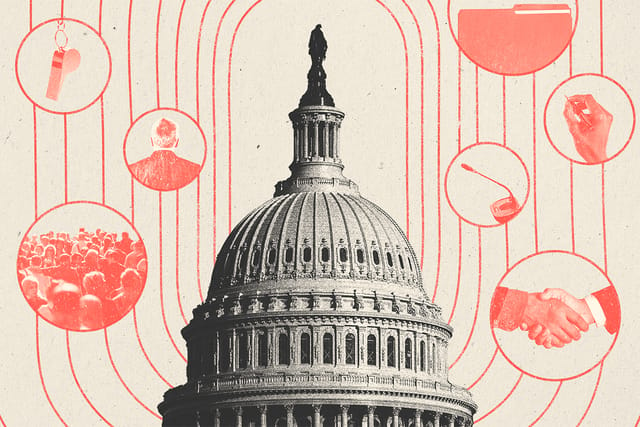
(Illustration: Ren Velez / POGO)
Oversight is one of Congress’s most essential responsibilities. When Congress conducts robust, fact-based oversight, it can identify systemic waste, fraud, corruption, mismanagement, and abuses of power. As the only branch of government empowered to enact laws, Congress is uniquely positioned to use the facts gathered through oversight to craft meaningful reforms that improve how the federal government serves the public.
Yet in recent years, congressional oversight has too often struggled to meet its full potential. Congressional investigations should be designed to serve the American people, to find the facts that can help shape reforms. More and more, however, it seems like they’re designed to serve members of Congress, to find the sound bites that will produce attention.
Last year was no exception. In 2025, much of Congress’s oversight attention was spent indulging politically charged disputes or relitigating actions from the previous administration. The most significant legislative achievement of the year was a party-line reconciliation bill, reflecting a broader trend in which sustained oversight hearings have become less frequent over time, particularly on systemic issues that directly affect everyday Americans, such as the rising cost of living and healthcare.
As we gavel in the second session of the 119th Congress, POGO has identified seven immediate actions Congress can take to strengthen oversight. Given narrow margins in the House and a limited legislative calendar this year, this work will be most effective when it emphasizes bipartisan fact-finding that benefits all Americans, rather than inquiries or legislative efforts that risk being perceived as overly partisan or retaliatory. Bipartisan oversight enhances credibility and increases the likelihood that investigative findings will translate into lasting, bipartisan reforms.
Along with our new edition of When Congress Comes Calling, a handbook on congressional oversight and investigations, these recommendations will help Congress set clearer goals, gather better information, run more purposeful hearings, and communicate its findings in ways that build public trust.
1. Don’t Wait to React: Plan for Routine Oversight
An ounce of prevention is worth a pound of cure, and focusing on routine oversight will produce better results for the public than holding flashy hearings. Routine oversight allows Congress to intervene before an issue becomes a scandal that erodes public trust, and it signals to agencies that you’re watching, which can promote better internal practices and performance.
Key to effective oversight is creating an oversight plan that identifies key objectives and outcomes. If you don’t yet have a plan in place, developing one now will still allow your staff sufficient time for fact-finding and strong investigations. For an annual oversight plan, a good rule of thumb is the 80/20 approach, where 80% of work is pre-planned and 20% is available for emerging issues that warrant scrutiny. Oversight plans can be published online or shared publicly through press releases. Making your plan public has the added advantage of allowing people to get in touch with information that could help your investigation.
2. Keep the Public Informed
Oversight practitioners shouldn’t stop informing the public after sharing their plans. Transparency is key throughout the oversight process — it helps the public understand why this work matters.
For example, congressional committees should release hearing memos that describe the intended objectives of an upcoming hearing and connect those goals to a systematic problem Congress is trying to solve. Too often, hearing memos are one-page documents that provide little to no information on the purpose of the hearing. Having more consistently robust information up front is key.
Once hearings are gaveled out, committees sometimes never return to the topic or the issues raised at the hearing, let alone share proposals for legislative action. When hearings or investigations simply end without further action, the public is left wondering what they were for, and what was accomplished. After hearings conclude, committees should communicate what actions will follow — whether legislation will be introduced, requests for administrative changes will be made, or additional oversight steps will be taken — so the public understands how fact-finding translates into accountability and reform.
3. Work Together
Oversight simply works better when lawmakers from both parties are involved. As we’ve written before, “given that the primary goal of investigations is to produce legislation, and that both sides need to come together to pass legislation, bipartisanship at the investigatory stage is crucial to build support for legislative change.”
When developing an oversight plan, committees should ensure that members of Congress from both parties are bought in and prepared to offer a unified front during the fact-finding process.
Letters and document requests carry more weight and are much harder to ignore when signed by members from both sides of the aisle. And while some committee members can issue subpoenas unilaterally, it doesn’t mean they should. A unilateral subpoena can signal division and give targets an incentive to delay and stonewall complying until there’s a change in power of Congress and the subpoena is withdrawn. Bipartisan subpoenas are more credible, more enforceable, and more likely to succeed.
The benefits of bipartisanship extend to personal offices working to conduct oversight, as well. If possible, we recommend identifying another personal office from a different party and working together to amplify your impact.
4. Work with Whistleblowers
Whistleblowers are crucial to oversight: They can help you learn about issues and gather information and evidence, which can be invaluable when it becomes difficult to get information through official channels. Members of Congress known for effective oversight tend to have a strong reputation for standing by whistleblowers and protecting their confidentiality. Knowing disclosures will be handled securely, promptly, and effectively can encourage whistleblowers to come forward.
POGO has long advised congressional staff to make it clear they want to hear from potential whistleblowers. When launching an inquiry, you can issue press releases letting whistleblowers know you’re looking for information and hoping to learn from them. Sending a public inquiry to an agency can have the added benefit of letting potential whistleblowers know you are seeking information. Committees can also establish web- or phone-based whistleblower hotlines that allow whistleblowers to choose whether they provide their names and contact information.
We also recommend House staff meet with the independent and nonpartisan Office of the Whistleblower Ombuds, a tremendous resource. The office can educate staff about whistleblower laws, working with whistleblowers, and establishing intake and reporting systems. Even if you’re not planning an oversight inquiry, these meetings can ensure you’ll be ready if a whistleblower comes forward.
5. Craft Strong Oversight Letters
Oversight letters often serve as the first step of an inquiry. When time allows, however, we recommend making them the second step. A preliminary meeting with an agency or private entity — before you draft your letter — can provide important context and information, including key terminology, processes, or practices. For example, you might use this meeting to learn what modes of communication the target of your investigation uses, which can inform the documents you request in your oversight letter.
Your letter should be precise about the information you seek and should include clear questions. If you are requesting documents, consider including certain categories such as communications, reports, memoranda, or an organizational chart. We recommend you begin your letter by naming your office or committee’s jurisdiction and mandate to conduct your inquiry and stating the inquiry’s legislative purpose. Providing this information can preempt jurisdictional objections that might otherwise delay the investigation.
Finally, a word of caution: While it may be tempting to ask for any information that could possibly be relevant, remember that staff will need to review all materials produced in response to your letter. Limiting your request to necessary information will make you look more credible and serious. Production requests should be tailored to the inquiry and reduced to only a reasonable volume of useful information.
6. Hold Better Hearings
When a hearing devolves into political theater, problems go unaddressed and needed reforms are missed. Bipartisan planning is one way to mitigate this risk, but there are other steps members of Congress and committees can take to improve hearings, as well.
First, we again caution Congress to resist the urge to be reactive. Committees frequently rush to schedule hearings in response to an unfolding event or news story. But a better approach is to slow down and do basic fact-finding first, conducting preliminary briefings and interviews, and obtaining documents to better guide your questions. This way, the public hearing is a space to clarify your understanding and gather supplemental information, rather than to conduct basic fact-finding. Coming into hearings informed will lead to better questions, providing all of us with a more accurate understanding of the problem and possible solutions.
Secondly, we recommend reconsidering the format of questioning at hearings. Currently, the standard practice is alternating five-minute time slots back and forth between members on each side of the aisle. While this approach appears fair on the surface, it also allows the next member of a committee to take the conversation in any direction they want. In April 2023, POGO and the Levin Center at Wayne Law wrote to Congress recommending committees adopt a recommendation of the House Select Committee on the Modernization of Congress. It called for experimenting with different hearing methods to allow for flexibility in questioning. The intended result is to allow for a more natural flow so the arguments of the witnesses and main objectives of the hearing don’t get lost. To facilitate this, committee staff on both sides of the aisle should work together to discuss the objectives of the hearing, then determine question times and order, ensuring their members are prepped to allow for uninterrupted exchanges.
7. Write One Report
After an investigation has concluded, POGO and the Levin Center at Wayne Law have found, committee majorities and minorities often issue separate reports on the same investigation. These two reports, often framed in partisan ways, invite the public to see Congress as ineffective. Instead of a single report that highlights factual findings and areas of agreement and then includes a majority analysis with one or more dissenting viewpoints, the public receives two reports which may be written in ways that sometimes suggest members of Congress cannot even agree on basic facts.
For years, we’ve advocated for committees to issue single reports that spotlight areas of agreement with the opportunity for dissenting viewpoints. POGO first highlighted this in 2017 as a common practice in the Senate, demonstrating its feasibility in the House.
The fact is, stronger oversight leads to better findings and recommendations, which in turn can then lead to a more ethical, effective, and accountable federal government. Across all of our recommendations, one theme is constant: Bipartisan oversight isn’t just good government, it also produces stronger inquiries, better information gathering, and more durable policy outcomes. These reforms help position Congress to better perform one of its most essential roles.
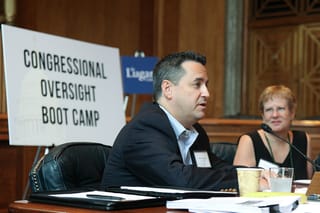
For more practical tips on strengthening oversight, POGO’s Congressional Oversight Initiative offers monthly trainings and two-day intensive oversight boot camps. Sign up for our Paper Trail newsletter to hear about upcoming sessions and to be notified when applications open for our February boot camp.