COVID-19 and the Constitution S01
Archived
COVID-19 Travel Restrictions: Protecting Public Health without Eroding Civil Liberties
This podcast series is no longer active and is preserved as an archive below.
Hosted by

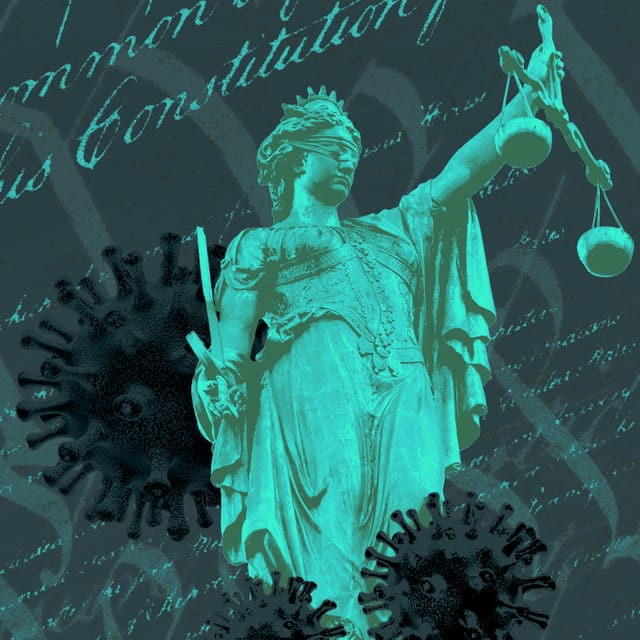
In this virtual briefing, we examine travel limits in response to the COVID-19 pandemic. The discussion breaks down what powers the government has to restrict entry into states and issue stay-at-home orders, and how policies should be designed to protect public health and while also safeguarding the fundamental rights critical to democratic society.
Some key takeaways include:
- Ability to travel is not just a convenience or important part of daily life, it is a constitutional right that the government cannot universally revoke.
- Public health—including setting limits on travel—is an area in which state and local governments have much more power than the president and the federal government.
- Restricting travel will not necessarily aid public health and reduce the spread of the pandemic; we need to focus on expert recommendations and should ideally enact policies tailored to the particular situation, such as robust testing and contact tracing.
- In order to both protect public health and preserve civil liberties, it’s critical measures have a clear rationale and be narrowly tailored.
- We’ve seen some court challenges to travel restrictions, but on a limited scale; if less socially accepted prohibitions are put into place, it could lead to more vociferous legal objections.
- It’s vital that Americans not see the incredible encroachment on rights due to COVID-19 as the new normal. This is a novel virus that is highly transmissible and ten times more deadly than the flu. It created a perfect storm that necessitated an unprecedented response.
Show Notes
Jake Laperruque - Speaker
Lawrence Gostin - Guest Speaker
Elizabeth Goitein - Guest Speaker
-
S01
Archived
COVID-19 and the First Amendment: Challenges to Speech and Religious Activity
In this week’s briefing, experts on First Amendment rights examine the range of questions raised for freedom of speech and religion created by COVID-19, especially as social distancing measures strain public activities and interactions.Listen Now -
S01
Archived
COVID-19 and Immigration: Protecting Immigrant Rights and Safety
The COVID-19 pandemic is creating serious public health risks. Our panel of experts explains why the threat of the virus is so severe in these immigration detention facilities, and how we can reduce them.Listen Now -
S01
Archived
Pretrial Detention and Access to Courts: How to Safeguard Liberty and Justice During COVID-19
In this briefing, we examine how the criminal justice system is responding to the COVID-19 pandemic, and the dangers it poses to the rights of the accused and how it could endanger thier lives.Listen Now -
S01
Archived
Surveillance in a Pandemic: Preserving Civil Liberties
As governments consider new surveillance measures to respond to COVID-19, we bring together medical and civil liberties experts to examine what will and won't be effective and how to preserve civil liberties.Listen Now -
S01
Archived
COVID-19 Travel Restrictions: Protecting Public Health without Eroding Civil Liberties
In this virtual briefing, we examine travel limits in response to the COVID-19 pandemic, what powers the government has, and how policies should be designed to protect public health and while also safeguarding fundamental rights.Listen Now