Don’t Put Independent Watchdog Office Under White House Control
Congress should reject the Restoring Integrity and Efficiency to Inspector General Oversight Act of 2025, which will weaken oversight and introduce conflicts of interest.
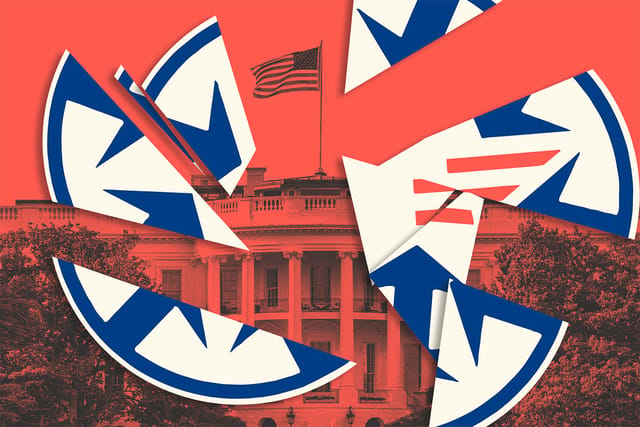
(Illustration: Luna Velez / POGO)
To:
- The Honorable James Comer
Chairman
House Committee on Oversight and Government Reform
2157 Rayburn House Office Building,
Washington, DC 20515 - The Honorable Robert Garcia
Ranking Member
House Committee on Oversight and Government Reform
2106 Rayburn House Office Building
Washington, DC 20510
Re: Opposition to the Restoring Integrity and Efficiency to Inspector General Oversight Act of 2025
Dear Chairman Comer and Ranking Member Garcia:
On behalf of the Project On Government Oversight (POGO), I write to express our strong opposition to the Restoring Integrity and Efficiency to Inspector General Oversight Act of 2025.1 POGO is a nonpartisan, independent watchdog that investigates, exposes, and champions reforms on systemic corruption, abuse of power, and waste.
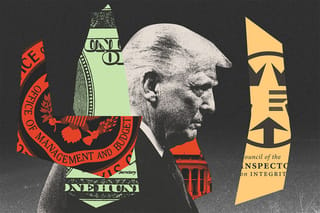
We oppose this legislation, which would abolish the Council of the Inspectors General on Integrity and Efficiency (CIGIE) — the independent body that coordinates the federal inspector general system — and transfer many of its core responsibilities to the Office of Management and Budget (OMB).
That change would substantially weaken the independence of inspectors general. It would undermine their critical work, introduce significant conflicts of interest, and diminish Congress’s capacity for oversight.
Congress created inspectors general because it recognized that federal oversight must remain independent of the White House and the agencies and officials that inspectors general are tasked with overseeing. To put it bluntly: Congress depends on inspectors general to provide independent, objective information about executive branch operations and misconduct.
And for almost five decades, across administrations from both parties, offices of inspectors general have done just that. They’ve exposed corruption and abuse of power, saved billions of taxpayer dollars, protected public health and safety, and enabled Congress to more fully exercise its constitutional oversight and legislative authorities.
Congress created CIGIE to strengthen the oversight system by promoting accountability within the inspector general community itself.2 CIGIE works to ensure that inspectors general perform their duties independently and ethically, and that they have the resources they need to work effectively. It helps maintain common professional standards by coordinating peer reviews of inspectors general offices to ensure they meet established audit, investigative, and oversight quality standards. And CIGIE ensures inspectors general and the agencies they oversee remain accountable to the public through the Integrity Committee. Eliminating CIGIE would not just weaken oversight of executive agencies; it would weaken oversight of the oversight community itself.
To be clear, our support of CIGIE is not uncritical. In fact, in 2022 we issued a report identifying several ways to improve and strengthen the council so it can fulfill its mission as the watchdog of the watchdogs.3 We encourage the committee to examine the recommendations in that report to develop a more targeted and constructive roadmap for CIGIE reform. But we also hope the committee will recognize that the Restoring Integrity and Efficiency to Inspector General Oversight Act of 2025 does not further the goal of effective, independent oversight — it undermines it.
Abolishing CIGIE and transferring responsibilities to OMB would replace oversight coordinated by independent inspectors general with oversight coordinated by the Executive Office of the President. This bill would enact a profound structural and philosophical change that should concern anyone, regardless of party, who believes oversight must remain independent of those being overseen.
OMB is not a neutral, independent oversight agency. It is one of the most powerful agencies in the federal government. Part of the Executive Office of the President, it is responsible for implementing the president’s budget and management agenda throughout the executive branch. It routinely makes decisions involving agency budgets and operations, spending priorities, federal grants, regulations, and workforce policy — all matters that could become subjects of inspector general investigations and congressional oversight.
Consider an inspector general investigating OMB’s implementation of appropriations law, impoundment decisions, grant administration, or reorganization decisions within their agency. Under this legislation, OMB could simultaneously establish oversight priorities, resolve jurisdictional disputes of investigations, and shape the workforce of that inspector general’s office. This structure would create an unavoidable conflict of interest, undermining both the perception and reality of inspector general independence and fundamentally eroding public confidence in federal oversight.
This bill must also be understood within the larger context of recent disputes concerning CIGIE’s independence. In 2025, OMB refused to release congressionally appropriated funding designated for CIGIE, claiming for itself Congress’s power of the purse.4 Members of Congress from both parties raised serious objections, and funding was restored only after significant congressional pressure.5
This legislation now seeks to accomplish through statute what OMB previously attempted through administrative action. Rather than allowing an independent institution created by Congress to continue carrying out its statutory responsibilities, this bill would eliminate that institution altogether and transfer many of its authorities to the very office that previously sought to deny it the resources Congress had provided.
As the committee considers how best to promote effective, independent oversight across the federal government, we urge you to focus on reforms that strengthen and improve existing accountability mechanisms rather than restructure them in ways that diminish their independence.
Weakening the independence of the inspector general system will not only affect inspectors general themselves and the agencies they oversee. It will also limit Congress’s own ability to conduct meaningful oversight. Every transfer of authority from an independent oversight body to the Executive Office of the President necessarily reduces Congress’s access to objective information about executive branch actions.
Congress has spent nearly 50 years strengthening the independence of inspectors general, because independent oversight strengthens accountability, protects taxpayers, and preserves Congress’s constitutional role. This legislation would reverse that longstanding bipartisan judgment. By ceding independent oversight to the president’s own management office, it would further weaken one of the government’s most important accountability mechanisms, along with Congress’s authority as the first branch of government.
For these reasons, we respectfully urge the committee to reject this legislation.