The technological leaps of the last decade have provided incredible benefits for all of us. But the guardrails and oversight around government surveillance — the critical checks that protect our privacy and civil liberties — were designed for a different time. They simply have not kept up with the exponential growth in our capacity for mass surveillance, which is now proceeding at a scale and a pace that would have been unimaginable just a decade ago.
There are clear steps Congress can take to protect our civil liberties, but the window for action is closing.
Close the Loophole Allowing Warrantless Surveillance
Simply by carrying a cell phone, we provide software, tech, and telecom companies with thousands of pieces of personal data: where we go, who we meet, what we search online, and more.
Congress and the courts have provided Fourth Amendment guardrails for how federal agencies can access these records: To get this type of information from telecom companies, agents must get a warrant.
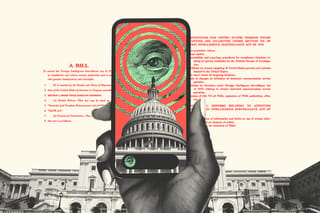
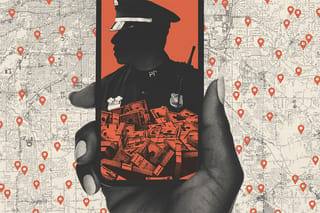
Unless they use the data broker loophole. Data brokers are businesses that make deals with software and telecom companies and other suppliers to access our private data. They bundle and resell it. And when they do, government agencies are free to buy it — no warrant required.1
- Public reporting has exposed the IRS, FBI, ICE, CBP, DEA, DOD, and other agencies using taxpayer money to buy information on Americans from data brokers.2
- Americans don’t trust the government to use their personal information responsibly. In a 2026 poll, roughly 3 in 4 agreed that “without privacy laws, ... it is likely that government agencies would use personal data to track and monitor anyone they want to.”3
Request: Support legislation to prohibit law enforcement or government agencies from purchasing data from data brokers if it would otherwise require a warrant or court order.
End the Weaponization of Americans’ Private Data
Federal agencies have any number of reasons to need people’s private data. When we pay taxes, apply for Social Security or Medicaid, or pass through TSA checkpoints, we rarely think twice about providing our age, location, income, or travel plans. Legal guardrails stop the government from repurposing this data for surveillance.
The Privacy Act of 1974, for example, put limits on how agencies can use and share the data they collect. It also assumed certain technological limitations: Even if agencies had the capacity to collect and store records from across the government, the volume of data involved would have been nearly impossible to search or analyze.
Today, AI and other technologies have removed those limits, allowing widespread collection and access to private data that couldn’t have been anticipated when the law was written.
- Key definitions in the Privacy Act haven’t kept pace with technology — and they don’t protect the private data of everyone in the United States. Moreover, the law does not require agencies to dispose of data when they don’t need it anymore.4
- Some agencies have also found ways around privacy protections, using loopholes in the law to access records from other departments without the required consent.5
- The law is missing some basic checks on power: It doesn’t require agencies to inform people when they share troves of information including personal data, and it doesn’t provide enough opportunities for courts to intervene when agencies violate the law.
Request: Reform the Privacy Act to protect more personal information, limit data sharing, and ensure agencies follow the law.
Protect Our Civil Liberties from Artificial Intelligence
AI-enabled technology has made it easier than ever for the government to track Americans as they go about their daily lives. It’s also made it easier to store, sort, and search the information gathered from that tracking.
The Department of Homeland Security alone has spent billions of dollars on mass surveillance, including for AI tools like face recognition on ICE agents’ phones, tools that scan social media posts, and databases that track protestors.6
Experts say these tools endanger our civil liberties, raising the additional concerns that AI can track anonymized data back to individuals, hold onto data and make it difficult to delete, improperly reveal or share data, and even generate inaccurate or deceptive information.7
- There are over 120,000 AI-powered license plate readers around the country. Together, they create a national network that collects tens of billions of images each month.8
- A 2026 GAO report shows that the guidelines for implementing AI across government don’t even provide a way to measure privacy protections — let alone set best practices for safeguarding our private, sensitive information.9
Request: Pass forward-looking legislation that prohibits law enforcement and government from using AI to engage in mass surveillance of Americans.
Stop Funneling Taxpayer Dollars into Mass Surveillance
The One Big Beautiful Bill Act and Secure America Act supercharged mass surveillance in the United States by directing hundreds of billions of dollars to the Department of Homeland Security. Much of that money went to ICE, which has pursued a violent crackdown on people across the United States in the name of immigration enforcement. Now, ICE and other DHS agencies are using the exponential increases to their budgets to conduct surveillance on millions of Americans every day — with few guardrails, little oversight, and no repercussions.
- ICE currently has a budget of $104 billion to spend by 2029. Its typical annual budget is under $10 billion.10
- ICE is deploying facial recognition, purchasing cell phone location data, tracking license plates, and combing online data.11 It’s reportedly planning a contract for an AI system to analyze people’s call records, financial records, and social media posts in real time.12
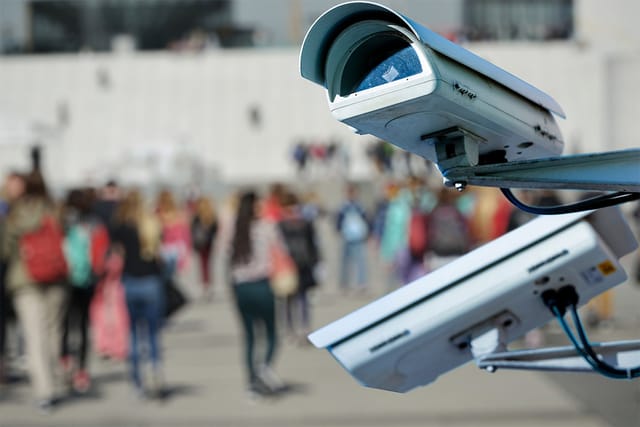
- DHS has allocated over $1 billion for surveillance towers, including AI-supported towers that can record and store images of everyday activity like people coming and going from their homes and children playing on playgrounds.13
Request: Claw back reconciliation funds going toward surveillance or prohibit the use of federal dollars to fund warrantless surveillance.
Fund Oversight and Accountability to Prevent Abuses
Despite its windfall from the reconciliation bill, the Department of Homeland Security has slashed the budgets of internal oversight offices. These offices were created by acts of Congress, and Congress funded them to ensure there were internal checks within this powerful agency, which has a history of abuses and overreach. At a time when DHS is spending more time surveilling the homeland than protecting it, the White House went around Congress to gut oversight and accountability within the agency.
- After funding cuts, the Office for Civil Rights and Civil Liberties, which responds to complaints of constitutional rights violations, reportedly cut staffing by 85%.14 The Office of the Immigration Detention Ombudsman, which investigated wrongdoing and mistreatment in detention centers, has closed.15
- Internal oversight is crucial, but it’s not sufficient. Congress must also restrict abusive practices by DHS and fund external watchdogs to ensure DHS follows new, more explicit rules.
Request: Use the appropriations process to reimagine oversight and privacy guardrails within DHS that are a check on abuses of power.