F-35 Program Office Finally Responds to Concurrency Orphan Report
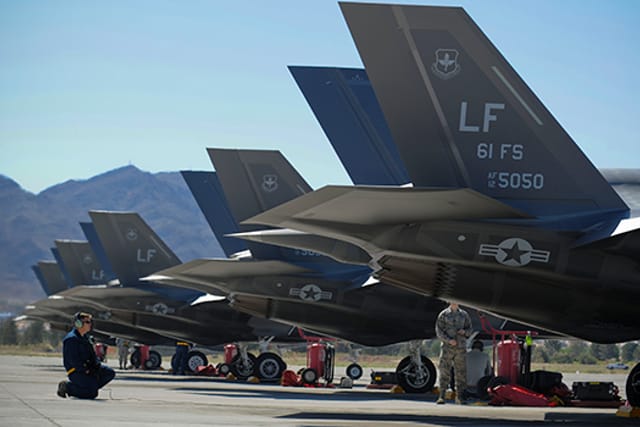
On October 12, 2017, the Project On Government Oversight published a report detailing a proposal floated by Vice Admiral Mat Winter, the F-35 Joint Program Executive Officer, to leave 108 Air Force F-35As in a less-than-combat-capable status. The costs involved to make more than 200 documented modifications to the aircraft purchased before completion of the development and testing process will be significant. This would potentially create budget pressure when the Air Force asks Congress to approve F-35 production increases in the coming years.
Before publishing our report, POGO reached out to the JPO and Lockheed Martin for comment, but at time of print had not received comment. Following publication, the Joint Program Office finally responded to POGO:
“The JPO is unaware of any option currently under consideration by the Services that would keep 2B or 3i configured jets as a final end state. We did provide data to the Services for this potential; however, the JPO analysis shows the best path forward is to modify fielded jets to the 3F configuration.”
While the Services may be planning to complete the upgrades, it will ultimately be up to Congress to authorize the funds necessary to do so.
The mere fact that the Program Office had even considered abandoning the upgrades for the 108 aircraft indicates that a concurrent acquisition strategy—an extreme overlap of design and production—is “acquisition malpractice” as stated by Frank Kendall, the former top weapons buyer.
As POGO has stated many times, the right way to do business is to pursue a “fly before you buy” acquisition strategy. Before committing billions of taxpayer dollars by buying hundreds of unproven systems, the Pentagon should only purchase significant quantities of any weapon after the design has been thoroughly proven by a rigorous combat-testing process.