Ensuring Nobody Is Above the Law
The Problem
Too often, officials don’t have to face the consequences of their actions. Weak anti-corruption laws riddled with loopholes allow wrongdoers in our government to skirt accountability. And when strong rules do exist, they are often not enforced. It’s a central tenet of our democracy: Nobody should be above the law. Exposing corruption and advocating for change, we are pushing our leaders to pass anti-corruption laws with real teeth — and to enforce them.
Did you know?
-
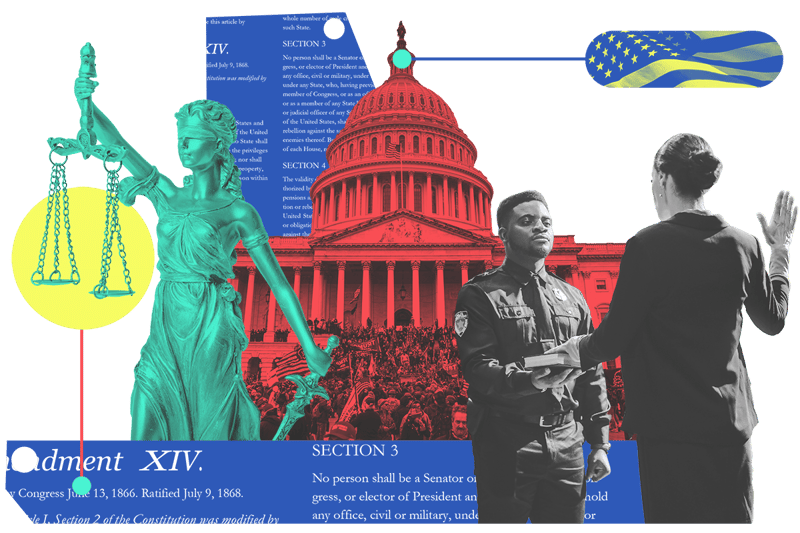
In 2022, a group of New Mexico citizens used Section 3 of the 14th Amendment to file a suit against a local county commissioner involved in the January 6, 2021, attack on the Capitol. A state judge agreed that the commissioner’s actions qualified as having engaged in insurrection and banned him from ever holding office again. The Constitution’s disqualification clause can and should be enforced elsewhere, including for former President Trump.
-
The Office of Legal Counsel often grants the president power beyond what the Constitution and laws have established, taking away power from Congress and the courts. This secretive office answers to the president, so it isn’t really held accountable to the people.
What's at Stake?
Federal Officials Who Violate Civil Rights Often Can’t Be Sued
If a federal official violates your rights, your options for legal recourse are woefully limited. The Supreme Court has chipped away at the one ruling that gave us an ability to hold federal officials accountable for constitutional violations.
Our Largest Law Enforcement Agency Faces the Least Accountability
Serious misconduct is prevalent within Customs and Border Protection, the largest law enforcement agency in the country. Yet officers face few repercussions for physical abuse and harassment.
Officials Who Engaged in the Insurrection Aren’t Held Accountable
Many of the government officials who engaged in the events of January 6, 2021, have faced no accountability. But there is a tool in the Constitution that could be used to prevent those who engaged in insurrection from returning to public office.

Tell Congress: DHS Needs More Accountability, Not More Money
The Department of Homeland Security is waging a lawless campaign across America. Congress needs to stop them.
Email Congress now Related Content