Defending Our Digital Rights and Privacy
The Problem
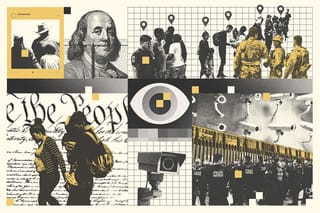
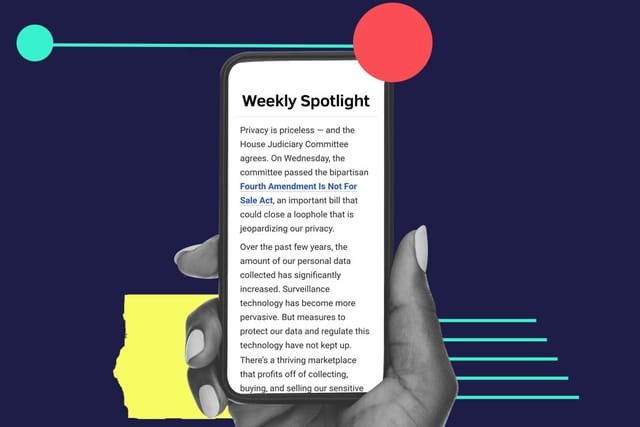
The Constitution offers protection against unreasonable searches, but current U.S. laws and policies don’t do enough to protect Americans from pervasive surveillance technologies. Just by carrying a phone, many of us produce a detailed record of where we go, who we speak with, and what we read. Much of this data can be obtained without a warrant — law enforcement can buy it from data brokers. To protect our constitutional rights, we need to bring our laws and policies up to speed on 21st-century surveillance technology. We’re pushing the federal government to enact reforms that would further restrict law enforcement from gathering data on private citizens without probable cause.
Did you know?
-
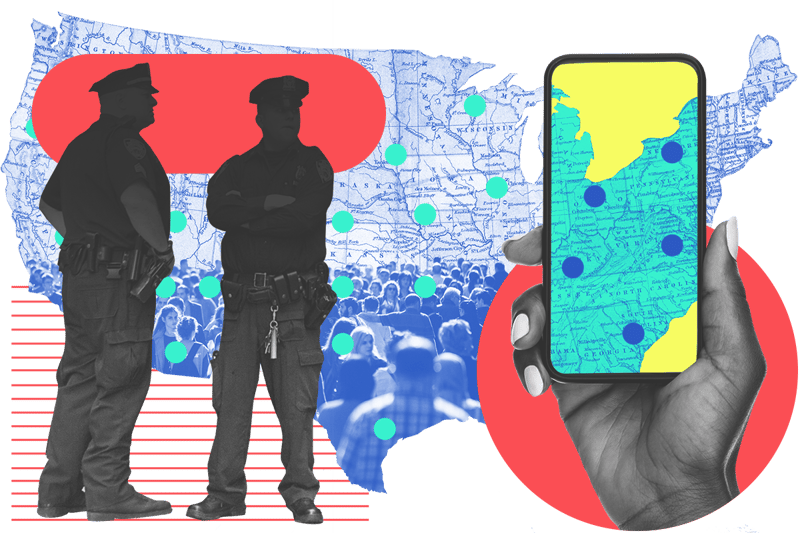
Stingrays, or cell-site simulators, are used by law enforcement to collect data including GPS locations, call histories, and text messages from all nearby cell phones. Police sometimes use these devices to collect data from large groups of people, even without a warrant.
-
In 2021, the IRS floated a plan to make some taxpayers use glitchy face recognition tech, requiring them to upload photos to a private company just to access information about their taxes. They dropped the plan after protests from POGO and others.
-
Baltimore police used face recognition to scan crowds protesting the killing of Freddie Gray in police custody. They identified individual protesters in the crowd by matching them to images on social media.
What's at Stake?
If Police Want Your Location Data, They Can Just Buy It
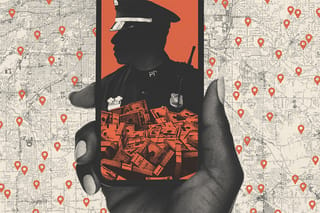
Existing laws require police to obtain a warrant in order to search cell phone location data. But police and other agencies have found their way around these requirements by simply purchasing the information directly from data brokers.
Agencies Are Using Invasive Tech to Monitor the Public
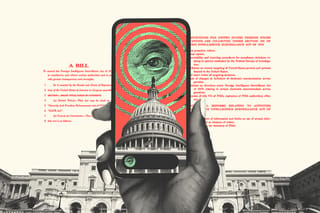
A law originally designed to allow intelligence agencies to collect information about “agents of foreign powers” has led to the creation of a database that includes the communications of an unknown (but potentially huge) number of Americans.
Surveillance Tech May Help Enforce Anti-Abortion, Anti-Trans Laws
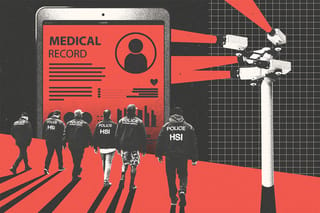
Unregulated surveillance technology, including the use of stingrays, geofence warrants, data brokers, and face recognition technology, may be used to surveil and prosecute people seeking abortion or gender affirming care in some states.
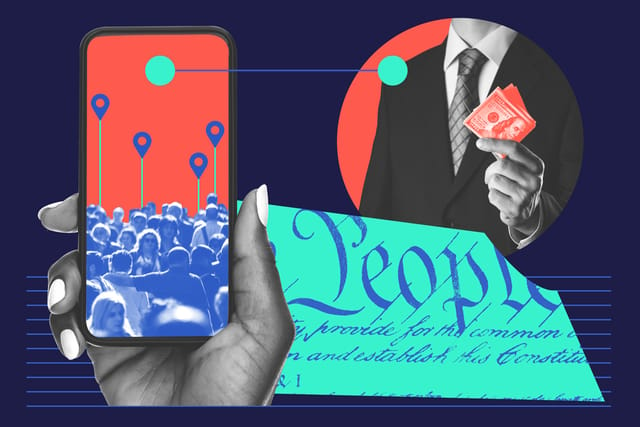
Tell Congress: Close The Data Broker Loophole
Law enforcement is bypassing the Fourth Amendment by purchasing people’s data from private brokers. Congress needs to step in.
Email Congress Related Content