Weakening GAO Harms Taxpayers and Decreases Accountability
A proposed appropriations bill would slash GAO’s budget and limit the agency’s oversight authority, costing taxpayers money in reduced effectiveness.
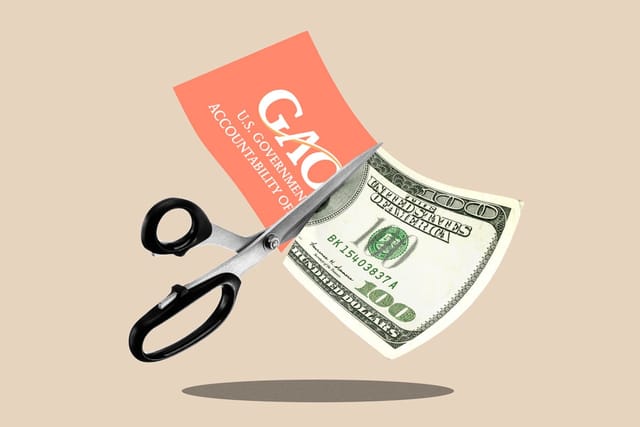
(Photo: Getty Images; Illustration: Leslie Garvey / POGO)
To:
- Senator Susan Collins
Chair
Senate Appropriations Committee
Washington, DC 20510 - Representative Tom Cole
Chairman
House Appropriations Committee
Washington, DC 20515 - Senator Patty Murray
Vice Chair
Senate Appropriations Committee
Washington, DC 20510 - Representative Rosa DeLauro
Ranking Member
House Appropriations Committee
Washington, DC 20515
Dear Chair Collins, Chairman Cole, Vice Chair Murray, Ranking Member DeLauro, and Members of the Committees:
On April 30, 2026, the Legislative Branch Subcommittee approved a spending bill that would cut the Government Accountability Office’s (GAO) funding by $200 million from its fiscal year 2026 enacted level, putting the legislative agency’s budget $248 million below the amount requested for 2027.1 Additionally, this bill would limit GAO’s ability to sue the executive branch to obtain agency records and information when an agency does not comply with requests, as is GAO’s legal right under the Impoundment Control Act.
In practice, this proposed reduced budget will require GAO to cut 1,000 employees.2 As an independent legislative watchdog that assists Congress in investigating waste, fraud, and abuse, not only would this reduction in staff increase the opacity of how taxpayer dollars are spent, it would also hinder Congress’s ability to conduct timely investigations and to effectively carry out other oversight matters.
The Project On Government Oversight (POGO) is a nonpartisan, independent watchdog that investigates, exposes, and champions reforms on systemic corruption, abuse of power, and waste. POGO has long recognized the importance of GAO’s work and uplifted the agency’s strong track record of helping the government identify billions of dollars in potential savings.3
Reducing GAO’s budget means reducing the agency’s capacity to better assist Members of Congress, which will indirectly harm taxpayers.
We urge the Senate and House Appropriations Committees to reject the legislative branch’s appropriations draft.
The Impact of Undermining GAO
Taxpayers deserve transparency into how their money is spent. Without an efficient GAO, it would be more difficult for Congress to identify wasteful spending and unnecessary costs. The agency has a long history of bipartisan support, as its recommendations have consistently delivered results across different administrations and parties.4 The result of the subcommittee’s bill on GAO would be reduced research capacity, lost opportunities to save taxpayer money, increased wait times for responses to requests from Members of Congress, and more.5
Limiting GAO’s enforcement power also undermines accountability. The enforcement mechanism at risk should not be perceived as a threat to Congress. GAO has rarely sued under the Impoundment Control Act (ICA). In fact, since the ICA’s enactment, GAO has initiated only one lawsuit, which was against President Gerald Ford over withholding funding for a housing program.6 When tensions between the executive and legislative branches are high, GAO has consistently defended Congress’s power of the purse and asserted that the President could not bypass congressional intent behind appropriated funds.7
GAO has traditionally been viewed as a trusted partner by both parties, and that is not without effort on the agency’s part.8 As Congress’s primary enforcement arm in preserving the constitutional separation of powers over federal spending, GAO inherently protects Congress from executive branch overreach. Additionally, GAO has demonstrated a willingness to work with any parties and administrations, and has maintained a strong commitment to government accountability. Even in the midst of recent intense scrutiny, the agency continues to respond to requests from Congress and executive agencies.
Conclusion
As constituents continue to demand greater oversight and increased transparency to hold public officials accountable, GAO’s work is more crucial than ever. Undermining the very agency that assists federal agencies and Members of Congress like yourselves in rooting out waste, fraud, and abuse is antithetical to the ethical standard Members have long espoused: “Public office is a public trust.”9
Cutting GAO’s funding makes government spending and investigatory operations less transparent and erodes public trust. For these reasons, POGO strongly urges the Senate and House Appropriations Committees to reject any language seeking to reduce the budget for the Government Accountability Office.
Thank you for the opportunity to submit this information and for your attention to this matter.