Reducing Conflicts of Interest
The Problem
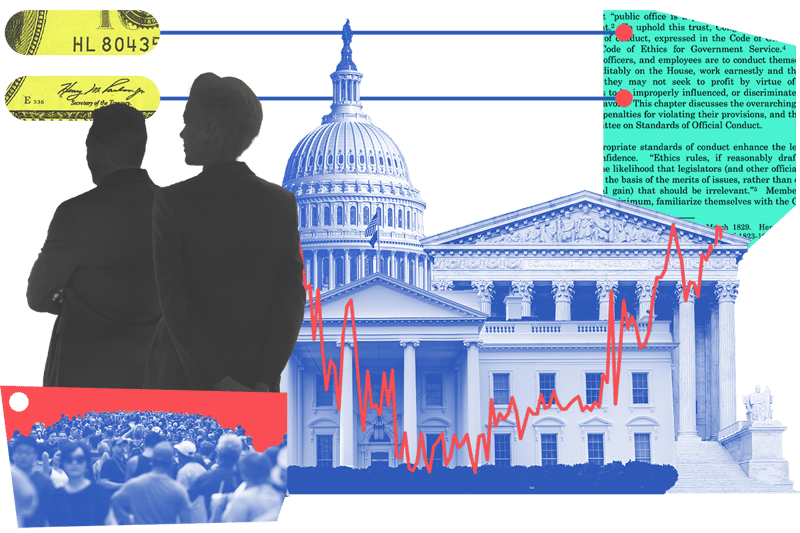
The American people shouldn’t have to question the motives of our leaders. But current laws don’t go far enough to ensure that those in power are working with the best interests of the United States and its people in mind. The rules around financial conflicts of interest are not strong enough to ensure that lawmakers aren’t profiting from the decisions we empower them to make every day. When the few rules that do exist are broken, penalties aren’t consistently applied. We’re pushing for stronger rules and enforcement, so the American people don’t have to wonder whether our leaders are working for us or working to line their own pockets.
Did you know?
-
While federal laws mandate that a Supreme Court justice should step away from a case when there’s a conflict of interest, it’s up to the justice themself to decide if a conflict exists. There’s no independent oversight to check their decision. And unlike every other federal court, the Supreme Court justices aren’t bound by a code of conduct.
-
The STOCK Act doesn’t ban members of Congress from trading stocks in office, it just asks them to report when they do. It’s an absurdly low bar, and one that members of Congress regularly fail to clear.
What's at Stake?
Former Service Members Are Working for Authoritarian Regimes
A 2022 POGO investigation revealed that the State Department is quietly granting waivers approving this work, including for countries the U.S. has criticized for human rights violations or authoritarianism.
There’s No Binding Ethics Code for the Supreme Court
The Supreme Court is the only judicial body in the country without a code of conduct. With more stories raising questions about their impartiality, the highest, most influential judges in the land should be tied to ethics standards.
It’s Totally Legal for Lawmakers to Profit from Their Decisions
Unlike the rest of us, lawmakers have access to privileged, non-public information. The decisions they make can move markets. Despite this, there’s no law preventing them from buying and selling stocks while in office.
Related Content