What It Means to Be a Pro-Oversight Member of Congress
Here are eight constitutional principles every member of Congress should embrace to strengthen oversight, accountability, and checks and balances.
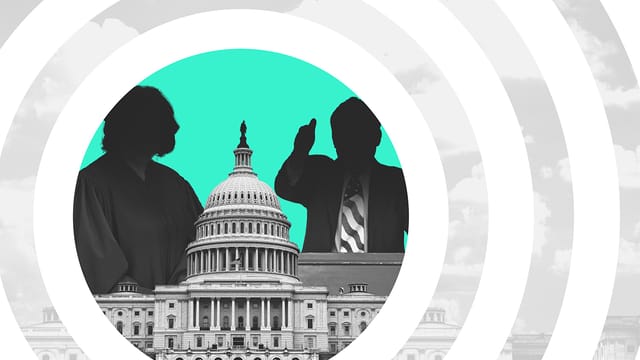
(Illustration: Luna Velez / POGO)
Next January, on the opening day of the 120th United States Congress, every member of the House and every new or re-elected member of the Senate will appear in the Capitol building, raise their hand, and swear to “support and defend the Constitution of the United States.”
When the people’s representatives in Washington take that oath, they’re promising to support the nation not only by drafting and passing legislation but also by defending the separation of powers, in which each of the three branches of government acts as a check on the others.
As James Madison wrote in Federalist Paper 47, “The accumulation of all powers, legislative, executive, and judiciary, in the same hands, whether of one, a few, or many, and whether hereditary, self-appointed, or elective, may justly be pronounced the very definition of tyranny.”
There’s a reason the legislative branch comes first in Madison’s list, just as there’s a reason its work is prescribed by the first Article of the Constitution. The framers intended Congress to serve as the primary check on concentrated power within the federal government — that’s why it’s the branch designed to be most directly accountable to the people.
Here are eight examples of what accountability looks like in action:
- Overseeing the executive branch’s implementation of the law
- Defending Congress’s power of the purse
- Ensuring transparency and accountability in federal spending
- Defending independent oversight institutions
- Protecting whistleblowers to promote accountability
- Conducting rigorous advice and consent review
- Reasserting Congress’s war powers
- Safeguarding checks and balances
For more than 40 years, the independent, nonpartisan Project On Government Oversight has supported members of Congress by providing them with the information they need to fulfill their constitutional responsibilities. For nearly half that time, our Congressional Oversight Initiative has trained congressional staffers from both chambers and both parties on best practices in oversight and investigations. We hope that every member of the 120th Congress will prioritize oversight. Here’s how.
“The President … shall take Care that the Laws be faithfully executed.”
The Constitution tasks the executive branch with executing the laws that Congress passes. But actions taken by federal agencies don’t always match up with the original intent of Congress, and they sometimes have unanticipated consequences. That’s why members of Congress must conduct regular, robust oversight of executive branch agencies.
Here’s how:
1. Request Information from Agencies
Members of Congress committed to oversight regularly ask the executive branch for the plans for implementing and executing new laws, how those plans align with congressional intent, what challenges have emerged, and whether additional reforms or authorities are needed to improve agencies’ effectiveness.
2. Review Agency Rules
Since agencies have considerably more subject matter expertise than Congress itself, Congress rightfully often gives executive branch departments broad discretion and flexibility when implementing laws. For example, legislation regularly tasks agencies with issuing new rules, regulations, and guidance and with authorizing new grant and loan programs.
Congress has a lot of power when it comes to overseeing what the agencies come up with to execute the legislation. Not only can members of Congress request that agencies make changes to their rulemaking or rescind existing or draft rules, Congress has at times even voted to overturn certain rules all together. To help agencies better serve their districts, members of Congress can also urge agencies to prioritize rulemaking in certain areas.
3. Conduct Routine Oversight
Routine oversight of government programs helps identify waste, fraud, abuse, inefficiencies, and implementation problems before they compound and escalate, costing taxpayers money.
Members conduct routine oversight by reviewing reports and audits from offices of inspectors general and the Government Accountability Office (GAO), conducting their own investigations, requesting briefings from agency officials, holding oversight hearings, and following up on recommendations to ensure problems are addressed.
Read more from POGO about how to conduct oversight of executive branch implementation:
- 7 Ways Congress Should Sharpen Its Oversight in 2026
- When Congress Comes Calling: The Limits of Executive Privilege
- Congressional Oversight and Investigations
- Congressional Oversight Investigations Primer

“No Money shall be drawn from the Treasury, but in Consequence of Appropriations made by Law.”
Among Congress’s most important constitutional powers is the “power of the purse.” It’s Congress, not the president, that decides how taxpayer dollars are spent — and by extension, it’s Congress that sets the bulk of federal policy priorities.
Here’s what exercising this important check looks like in action:
1. Evaluate Budget Requests
Although the president submits an annual budget request, Congress is under no obligation to follow it, and members usually makes changes through their appropriation committees.
The House and Senate appropriations committees have the power and the responsibility to analyze the president’s budget requests, conduct hearings with heads of agencies and departments, and craft appropriations legislation that the executive branch must execute.
2. Oversee Agency Spending
Once appropriations bills have been signed into law, it’s on Congress to ensure federal agencies spend the money as directed. While agencies may have some authority to reprogram or transfer funds, that flexibility is constrained by appropriations laws and other statutes, including the Antideficiency Act and Impoundment Control Act, as well as restrictions and conditions Congress places on the use of funds. Members typically do this by holding oversight hearings, requesting briefings and agency documents, reviewing spending reports, examining audits and inspector general findings, and requiring agency officials to explain how appropriated funds are being used.
3. Defend Against Overreach
Federal law asserts that agencies must execute appropriations as enacted. In recent years, however, the executive branch has violated federal law by withholding or delaying obligated funds. Members committed to oversight should ensure executive branch agencies obey the law by strengthening appropriations language to prevent executive overreach; holding oversight hearings and using GAO findings to determine how money is spent; demanding explanations from executive officials when spending is withheld or misdirected; and, when necessary, pursuing legal or legislative remedies to ensure funds are spent as Congress directed.
Read more from POGO about how Congress can defend its power of the purse:
- The Power of the Purse and Congress’s Fiscal Responsibility
- Executive Overreach Could Shut Down the Government

“A regular Statement and Account of the Receipts and Expenditures of all public Money shall be published from time to time.”
Congress has a constitutional responsibility to ensure taxpayer dollars are spent efficiently and for their intended purpose. Effective oversight depends on access to accurate, timely, and reliable spending data. As part of their oversight responsibilities, members of Congress should determine whether federal programs are working as intended; identify waste, fraud, and abuse; and make informed appropriations and policy decisions.
Here’s how they can do that:
1. Evaluate Program Performance
Reliable spending information empowers Congress to be more informed and better decision-makers. Lawmakers should review reports to Congress from agencies, their inspectors general, the Congressional Research Service, and GAO to evaluate whether programs are achieving their intended purpose, reaching the appropriate recipients, and delivering the intended outcomes. Members committed to oversight will use this information to inform future legislation and appropriations decisions and to determine whether programs should be expanded, reformed, or eliminated.
2. Demand Reliable Public Spending Data
Public tools such as USAspending.gov allow Congress and the public to better understand how federal agencies are spending taxpayer dollars, providing lawmakers with the information necessary to evaluate program performance and identify potential problems. However, these public tools can be incomplete or incorrect in their reporting, and too often they don’t identify the final recipient of federal funds. Members who care about oversight will support legislation that closes gaps in public reporting and makes this data more accurate.
Read more from POGO about how to improve transparency and accountability in federal spending:
- Fact Sheet: Increase Federal Spending Transparency
- A New System Won’t Boost Transparency — Fix USAspending.gov
- How to Use POGO’s Census Funding Data
- Contracting Scandals at DHS Underscore Need for Reforms

“To make all Laws which shall be necessary and proper for carrying into Execution the foregoing Powers.”
There are nearly two million federal civilian employees, yet fewer than 19,000 congressional staff to oversee them. To help provide the expertise and support necessary for effective oversight, Congress has created independent, nonpartisan oversight institutions. These independent agencies provide candid, fact-based assessments of executive branch performance — analyses that aren’t influenced by the agencies they oversee. Members of Congress committed to oversight will defend these important institutions.
Here’s what that looks like:
1. Strengthen the Government Accountability Office
The GAO audits and investigates executive branch programs, reviews agency contract awards to ensure they are aboveboard, and makes recommendations to improve government program performance and ensure accountability. Despite GAO’s more than a century of effective oversight, and despite the more than $1.5 trillion in financial benefits that have resulted, we’ve seen recent efforts to weaken and sideline the office. To protect GAO’s ability to operate independently and ensure it has the resources it needs, members of Congress should request GAO investigations, respond to its recommendations, and provide it with adequate funding.
2. Support Offices of Inspector General
Created by Congress in the wake of the Watergate scandal, offices of the inspector general (OIGs) serve as independent watchdogs within federal agencies. They report not only to the agencies they oversee but also to Congress, and they keep Congress informed on waste, fraud, abuse, and mismanagement. Currently, however, there are dozens of vacant inspector general positions, including many awaiting nomination by the president, and Congress is debating legislation that would erode the critical independence of the inspector general system. Members serious about oversight should confirm qualified inspectors general, protect statutory safeguards for these offices, require agencies to respond to their findings, and ensure vacancies are filled promptly.
3. Act on Oversight Findings
Oversight reports from independent institutions like OIGs and the GAO have little value if they are ignored. To fulfill their oversight responsibility, members of Congress should use findings from inspectors general and the GAO to conduct hearings, request corrective actions, improve legislation, strengthen agency management, and ensure taxpayer dollars are being spent effectively.
Read more from POGO about how Congress can defend independent oversight institutions:
- The Administration’s Latest Attack on Oversight
- The Inspector General Caucus Must Stand Up Against Trump’s Illegal Firings
- OMB’s Latest Attempt to Sideline GAO
- A Power Grab at the Library of Congress

“To make all Laws which shall be necessary and proper for carrying into Execution the foregoing Powers.”
In 1778, the Continental Congress passed the nation’s first whistleblower protection law, recognizing that exposures of government wrongdoing are the first step to accountability, and that whistleblowers enable Congress to more effectively exercise its legislative and oversight responsibilities. Today, there are several steps that members of Congress committed to oversight can take to protect whistleblowers.
1. Encourage Lawful Disclosures
Many of Congress’s most consequential oversight investigations have relied on whistleblowers willing to report waste, fraud, abuse, and misconduct. Further, in fiscal year 2025, whistleblowers helped recover more than $5.3 billion through the False Claims Act alone, demonstrating their vital role in protecting taxpayer dollars. Congress should ensure federal employees understand how to lawfully report wrongdoing and that protected disclosures are taken seriously. Congress can do this by requiring agencies to regularly inform employees of their whistleblower rights and reporting channels and by conducting oversight to ensure agencies properly respond to protected disclosures.
2. Protect Against Retaliation
Past Congresses have not only enacted legislation requiring federal employees to come forward to report wrongdoing but also passed legislation protecting whistleblowers from retaliation. Yet even with these legal protections, potential retaliation can prevent whistleblowers from coming forward. When that happens, waste, fraud, abuse, and corruption are more likely to remain hidden and to continue. Pro-oversight members should strengthen whistleblower protections, investigate retaliation claims, and conduct oversight to ensure agencies comply with federal whistleblower laws.
3. Follow the Facts
Despite historic, bipartisan congressional support for whistleblowers, today some members of Congress view whistleblowing through a partisan lens. Members should evaluate whistleblower disclosures based on the evidence, and not on which administration or party may be affected. Following the facts wherever they lead is imperative to executing Congress’s oversight responsibilities and to building a more accountable and effective federal government.
Read more from POGO about protecting whistleblowers to promote accountability:
- Congress Must Protect Whistleblowers After a Year of Attacks
- Congress Can Shield Whistleblowers from Schedule Policy/Career
- Ten Frequently Asked Questions About Whistleblowing
“The President … shall nominate, and by and with the Advice and Consent of the Senate, shall appoint.”
The Constitution gives the president the authority to nominate individuals to the leadership of executive branch departments and to the federal judiciary. But the Constitution gives the Senate the responsibility to determine whether those nominees should be entrusted with public office. The advice and consent process is an often overlooked dimension of congressional oversight.
Here’s how members of the Senate can use this process to bolster our system of checks and balances:
1. Vet Nominees Thoroughly
Senators should carefully evaluate each nominee’s qualifications, experience, judgment, integrity, and commitment to faithfully executing the law. Members of the Senate should use confirmation hearings to establish a factual, public record of nominees’ experience and commitments, ask difficult questions, and determine whether nominees are prepared to serve in positions of public trust.
2. Continue Oversight After Confirmation
Congress’s oversight responsibilities do not end once a nominee has been confirmed. Members of both the House and Senate should continue engaging with executive branch officials through letters, briefings, and hearings to evaluate how agencies are implementing the laws Congress enacted, the programs and policies they administer, and how taxpayer dollars are being spent.
3. Exercise Independent Judgment
Congress has the ultimate constitutional remedy for serious misconduct by federal officials: impeachment. But rigorous advice and consent helps prevent unqualified or unsuitable nominees from assuming positions of public trust in the first place. Members of Congress should approach the confirmation process with independence and rigor, evaluating each nominee on their qualifications, integrity, and commitment to public service rather than deferring to a president or political party.
Read more from POGO about Congress’s advice and consent role:

“The Congress shall have power … To declare War, grant Letters of Marque and Reprisal, and make Rules concerning Captures on Land and Water.”
Declaring war and sending service members into armed conflict is among the most consequential decisions any government can make. As a result, the Constitution deliberately divided military authority between the executive and legislative branches: The president is commander in chief, but it’s Congress that decides whether or not the nation goes to war. Under presidents of both parties, however, Congress has largely continued to acquiesce to the executive branch on this important duty.
Any member of Congress committed to oversight should be willing to take some very clear steps to reinforce that war powers remain the sole province of the legislative branch.
1. Debate and Vote on Military Engagements
Members of Congress should not avoid difficult decisions involving the use of military force. Refusing to call a vote on a declaration of war is a refusal to go on record naming whether a given conflict is significant enough to require the risk of American lives. If the executive branch believes military action is necessary, lawmakers should debate it publicly, vote on it, and remain accountable to their constituents for that decision.
2. Demand Timely Briefings and Oversight
Whenever U.S. forces are introduced into hostilities, members of Congress should insist they promptly conduct classified and public briefings and hearings, where administration officials explain the legal basis for the operation, its strategic objectives, the anticipated costs, the risks, and the administration’s strategy for bringing the conflict to a close. Members should use hearings and oversight to continually evaluate whether military operations remain necessary and appropriate.
3. Regularly Review Existing Authorizations
Congress should regularly review existing authorizations for the use of military force and determine whether they remain necessary or should be updated, repealed, or replaced. Military conflicts and national security priorities evolve over time, and authorizations for force that were appropriate when enacted may no longer reflect current realities. Regular review by existing and new members ensures Congress continues to exercise its constitutional responsibility over decisions involving the use of military force rather than relying indefinitely on authorities enacted by previous Congresses.
Read more from POGO about Congress’s War Powers:
- Congress Must Reclaim and Reassert War Power
- Trump Must Justify Iran War to Congress Now
- Iran and the War Powers Problem
- Airstrikes, Maduro, and the U.S. Constitution
“All legislative Powers herein granted shall be vested in a Congress of the United States, which shall consist of a Senate and House of Representatives.”
The Constitution’s separation of powers is designed to prevent any one branch of government from accumulating too much power. In Federalist Paper 48, Madison wrote, “a mere demarcation on parchment of the constitutional limits of the several departments, is not a sufficient guard against those encroachments.” In other words, the Constitution’s separation of powers doctrine only works when the branches actually defend their authorities. Protecting these institutional powers protects both Congress and the Constitution itself.
Here’s how members of Congress can defend the legislative branch’s constitutional authorities whenever they are challenged, regardless of which party controls the White House:
1. Defend Congress’s Right to Information
Effective oversight depends on Congress’s ability to obtain information from the executive branch. Members should actively seek information through oversight letters, briefings, hearings, and, when necessary, subpoenas. However, the executive branch often goes to great lengths to shield itself from oversight, and existing executive branch policy often limits responses to oversight requests from individual members of Congress. Members of Congress should resist any attempts that prevent them from getting the information they need to fulfill their constitutional responsibilities.
2. Scrutinize Assertions of Executive Privilege
The Supreme Court has concluded executive privilege is implied by the Constitution’s separation of powers. However, executive privilege is a qualified doctrine — not an absolute one. While there are legitimate uses of executive privilege, it should never be invoked to shield misconduct or prevent Congress from obtaining information necessary to fulfill its Article I responsibilities. When the executive branch asserts executive privilege, members of Congress should carefully scrutinize those assertions — and challenge those that lack a sufficient constitutional basis.
3. Use Congress’s Constitutional Authorities
The Constitution provides Congress a number of tools to help ensure members can obtain the information necessary to conduct effective oversight, including issuing subpoenas, withholding funding through its power of the purse authority, withholding consent of nominees, and challenging executive privilege claims in court. If the executive branch refuses to provide Congress with information, members must be willing to use these tools to assert their authority as a coequal branch of government.
4. Preserve Accountability
The Constitution provides Congress with one final safeguard against serious abuses of public office: impeachment. The House of Representatives has the sole power to impeach federal officials, while the Senate has the sole power to try impeachments and, upon conviction, remove officials from office. This authority reinforces the Constitution’s foundational assertion that no federal official, including the president, is above accountability.
Read more from POGO about safeguarding checks and balances:
- When Congress Comes Calling: The Limits of Executive Privilege
- Where Is Congress?
- Congress Must Reclaim Its Role as a Check on Executive Power
- The Sweeping Presidential Powers Allowed by National Emergencies
The Constitution entrusts Congress with significant powers — not as privileges, but as responsibilities. The eight principles outlined in this guide reflect the core constitutional duties of an effective, pro-oversight member of Congress. Regardless of party or ideology, members who faithfully exercise these responsibilities strengthen the institution of Congress, preserve the separation of powers, and help ensure the federal government remains accountable to the people it serves.
Note: POGO is a nonpartisan 501(c)(3) organization and does not support or oppose candidates for public office. This guide was provided as an educational resource to candidates in the following 2026 races: ME-02, NE-02, NY-07, NC Senate, and IA Senate, as well as to the Democratic National Committee and Republican National Committee. Read the letters to the 2026 candidates and to the national committees.